Appliance Leak Cleanup in DeSoto, TX
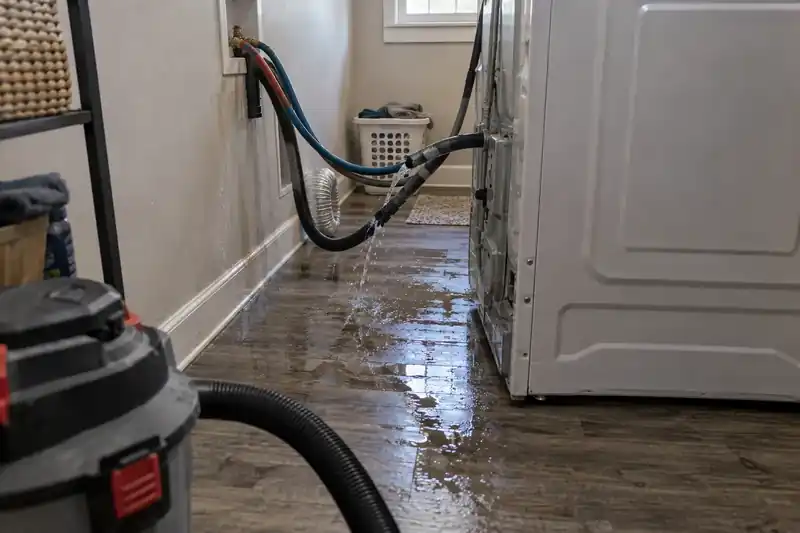
A leaking water heater, washer hose, dishwasher or ice-maker line keeps running until a valve is closed. Shut off the valve at the appliance or the main, then call us. Our crew can extract the water and dry the floor, cabinets and walls before they swell and start to smell.
226 Google, Yelp & Facebook reviews · Est. 2019
Request water extraction
Send your details and our team will contact you.
Water spreading now? Call (972) 961-2225
What is appliance leak cleanup?
Appliance leak cleanup is water extraction and drying for a loss that starts at a household appliance instead of inside the plumbing in your walls. The usual sources are a tank water heater, the supply hoses behind a washing machine, the lines that feed and drain a dishwasher, and the thin water line that runs to a refrigerator's ice maker and dispenser.
These leaks share two traits. Most are fed by a pressurized supply line, so they keep running until someone closes a valve. And most happen where nobody is looking: behind the washer, under the dishwasher, inside a garage or utility closet, or behind a refrigerator pushed tight to the wall. By the time water shows at a doorway or under a baseboard, it has usually been spreading for a while.
The job covers more than the puddle. It means finding every material the water reached, deciding what can be dried in place and what has to come out, and drying the rest until moisture readings prove it is dry.
How does appliance leak cleanup work?
Every job starts with the source isolated and the water category identified. Water from a burst supply hose or a cracked ice-maker line starts out as clean Category 1 water. Water from a washing machine drain or a dishwasher discharge is Category 2 gray water, because it has been through a cycle with detergent, food soil or lint. Clean water that sits also picks up contamination from the floor and materials it soaks, which is one more reason to move quickly.
From there, our crew works with equipment sized to the room and the materials:
- Extractors and wet vacuums remove standing water from tile, vinyl plank and sealed concrete.
- Carpet extraction tools pull water out of carpet and pad in the hallway or bedroom next to the laundry room or kitchen.
- Moisture meters and thermal cameras follow the water under cabinets, behind the washer outlet box and through shared walls.
- Air movers and dehumidifiers dry walls and floors and pull the evaporated moisture out of the air.
- Cavity drying forces dry air through small openings behind baseboards or under cabinet toe-kicks into spaces that fans cannot reach.
Kitchens and laundry rooms are harder to dry than an open bedroom. Cabinets sit directly on the slab, and many cabinet boxes are built from particleboard or MDF that swells when it stays wet. Vinyl plank and laminate trap water underneath where it cannot evaporate. Our technicians may pull toe-kick panels, slide out the dishwasher or washer to reach the floor beneath it, or lift sections of flooring to dry the concrete. After that, structural drying continues until the cabinet bases, wall plates and slab read dry, not just look dry.
What are the warning signs?
Some appliance leaks announce themselves with a flood across the floor. Many more start as a slow drip that only shows up once flooring or cabinets are damaged. Look for these:
- Water or rust-colored staining in the pan under the water heater, or a wet ring on the floor around it.
- Water dripping from the end of the relief valve discharge pipe on the side of the water heater.
- A puddle that comes back after every wash, often during the fill or drain part of the cycle.
- Bulges, cracks or rust on the washer supply hoses and their fittings.
- Water seeping from under the dishwasher door or the kick plate after it runs.
- Cabinet bases next to the dishwasher or sink that are swollen, peeling or soft to the touch.
- Laminate or vinyl plank near the refrigerator that has started to cup, lift or feel spongy.
- A musty smell or darkening baseboards along the wall shared with the laundry room or kitchen.
A quick test for a hidden leak: turn off every faucet and water-using appliance, then check the water meter. If its dial or leak indicator is still moving, water is going somewhere it should not.
What causes it in DeSoto homes?
Most DeSoto homes are brick houses on concrete slabs built between the 1970s and the 2000s. A house of that age has been through several water heaters and washers, and the valves and connectors behind them are not always replaced along with the appliance. On a slab, a leak has nowhere to drain, so it spreads sideways under walls and flooring.
Water heaters
Tank water heaters wear out from the inside as sediment and corrosion attack the steel tank. When the tank rusts through, it leaks from the bottom and keeps refilling from the cold supply. The temperature and pressure (T&P) relief valve is built to open when the tank gets too hot or the pressure climbs too high, so a valve that drips constantly is either worn or warning you about the system. The drain valve at the base and the connections on top can also leak. Depending on the house, the heater sits in the garage, a hall closet or the attic, and an attic unit that fails sends water straight into the drywall below.
Washing machines
Rubber supply hoses harden and crack with age, and a hose that splits while its valve is open releases water at full house pressure. Braided hoses resist bursting better but can still fail at the crimped ends. On the drain side, a hose can slip out of the standpipe, or a partly clogged standpipe can overflow during the spin cycle. Because the laundry room sits on the same slab as the rest of the house, the water crosses under the wall plates into the hallway, kitchen or bedroom next door.
Dishwashers and refrigerators
A dishwasher can leak from its supply line under the sink, its drain hose connection, a worn door gasket or a failed pump seal. Because it sits between cabinets, the water runs under the cabinet bases and kitchen flooring before anyone sees it. A refrigerator ice maker is fed by a small line, often plastic tubing, that cracks or kinks when the fridge is pushed back. Older installations may use a self-piercing saddle valve, a fitting prone to leaking. That water can sit under the refrigerator for weeks.
What can you safely check first?
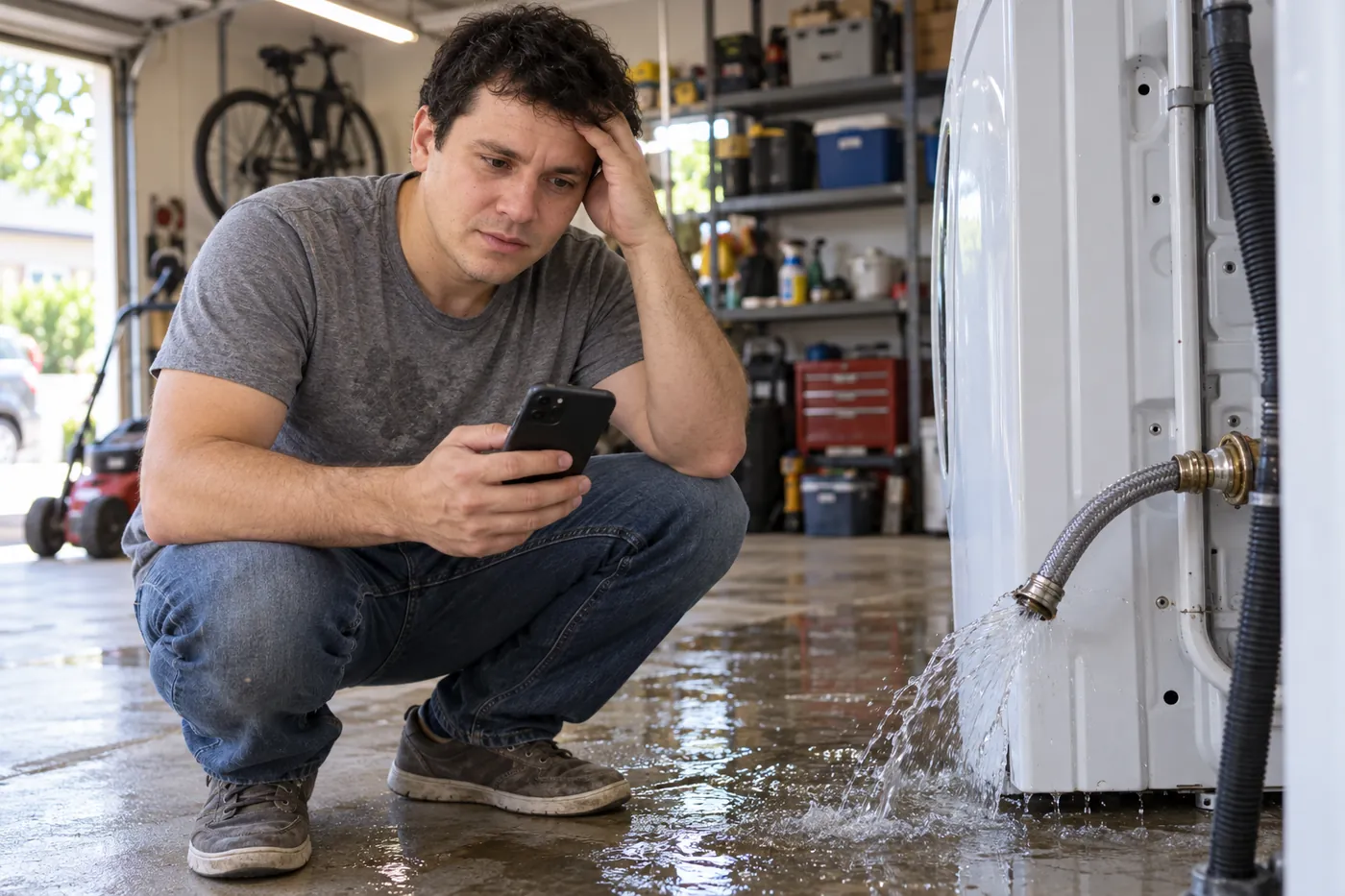
Close the valve that feeds the leaking appliance. If you cannot find it or it will not turn, close the main shut-off for the house.
- Water heater: close the cold-water inlet valve on top of the tank. Switch off the breaker for an electric unit, or turn the gas control on a gas unit to OFF.
- Washing machine: close the hot and cold valves in the wall box behind the washer.
- Dishwasher: close the supply valve under the kitchen sink and switch off the dishwasher's breaker.
- Refrigerator: close the valve behind the fridge or under the sink.
Photograph the appliance, the failed part and every wet area before cleaning up, and keep the failed hose or fitting. Your insurer may want to see it.
WarningDo not open the relief valve or drain a leaking water heater yourself. The water inside can be hot enough to scald, and an electric heater powered on with an empty tank can burn out its heating elements. Leave draining to a plumber or to us.
What happens during our visit?
An appliance leak visit follows a set order, so the work is documented and nothing wet gets closed up.
- Confirm the leak is isolated and check for electrical hazards around the appliance, outlets and the water heater's controls.
- Identify the water category and ask how long the leak may have been running.
- Map moisture across the floor, under the appliance and cabinets, and on the far side of shared walls.
- Move the appliance if needed, then extract standing water and wet carpet or pad in nearby rooms.
- Remove what cannot be dried, such as swollen particleboard, saturated pad or wet baseboards.
- Set up air movers, dehumidifiers and cavity drying for walls and cabinet bases.
- Take daily moisture readings and photos until every material reaches its dry standard.
We handle the water damage, not the appliance. Replacing a failed water heater or reconnecting a washer is plumbing work, so ask us whether that is part of our job or whether you need a plumber. Either way, have the new appliance hooked up with new hoses or connectors instead of reusing the old ones.
What affects the cost?
We inspect first and price the job from what we find. These factors matter most for an appliance leak:
| Factor | Why it matters for an appliance leak |
|---|---|
| How the appliance failed | A burst supply hose releases far more water than a slow gasket drip, and spreads it through more rooms. |
| Clean or gray water | Supply-line water can often be dried in place. Drain water from a washer or dishwasher needs more cleaning. |
| How long it ran | A leak that ran overnight or while the house was empty reaches farther under walls and flooring. |
| Cabinets and flooring | Particleboard cabinets, laminate and vinyl plank may need removal. Tile on a slab usually dries in place. |
| Where the appliance sits | A garage water heater mostly wets bare concrete. An attic or closet unit can soak ceilings and walls. |
When is it an emergency?
Treat it as an emergency when water is still flowing and you cannot close a valve, when water is near outlets, the electrical panel or a gas water heater's burner, or when an attic or closet water heater is leaking toward a ceiling. A slow drip you caught early is still a same-day job, because cabinets and flooring start swelling before the damage looks serious.
Pro tipClose both washer valves, or the main, before you leave town. A leak that starts in an empty house runs until someone comes home. A battery leak alarm on the floor beside the water heater, washer and dishwasher gives you an early warning when you are home.
Frequently asked questions
Does homeowners insurance cover an appliance leak?
Many policies cover sudden, accidental water damage from a failed appliance, such as a washer hose that bursts. They usually do not pay to replace the appliance itself, and they often exclude damage from a slow leak that ran for weeks. Your policy wording decides it, so photograph everything and keep the failed part.
Is water from a washing machine or dishwasher safe to clean up myself?
Water from a burst supply hose is clean water. Water from the drain side of a washer or dishwasher is gray water that carries soap, food soil and lint, so wear gloves and do not let it sit. Either way, water that reached carpet pad, cabinets or walls needs professional extraction and drying.
My water heater relief valve is dripping. Is that a leak?
The temperature and pressure relief valve is a safety device that opens when the tank gets too hot or the pressure climbs too high. A steady drip means the valve is worn or the system is running hot or over pressure. Never cap or plug it. Have a plumber check it and have any wet flooring dried.
Can kitchen cabinets be saved after a dishwasher leak?
Often, if the leak is caught early and the cabinet bases are dried quickly with the toe-kick panels removed. Particleboard or MDF that has already swollen, crumbled or peeled does not return to its shape and is usually replaced.
How do I stop a refrigerator ice-maker line leak?
Close the supply valve behind the refrigerator or under the kitchen sink. If you cannot find it, close the main shut-off. Unplug the refrigerator only if you can reach the plug while standing on a dry floor, then photograph the line and the wet area.
Should I replace rubber washing machine hoses?
Yes, if they are cracked, bulging, stiff or rusted at the fittings. Braided stainless steel hoses resist bursting better than plain rubber, but they still wear out, so inspect them whenever the washer is moved and follow the manufacturer's replacement schedule. Closing both valves before a trip takes the pressure off completely.
What Your Neighbors Are Saying About Us
Close the valve, then call
Call us, and our crew can extract the water and dry your laundry room, kitchen or garage before the cabinets and flooring are ruined.
DeSoto Water Extraction Pros · 1603 Osprey Dr #107, DeSoto, TX 75115