
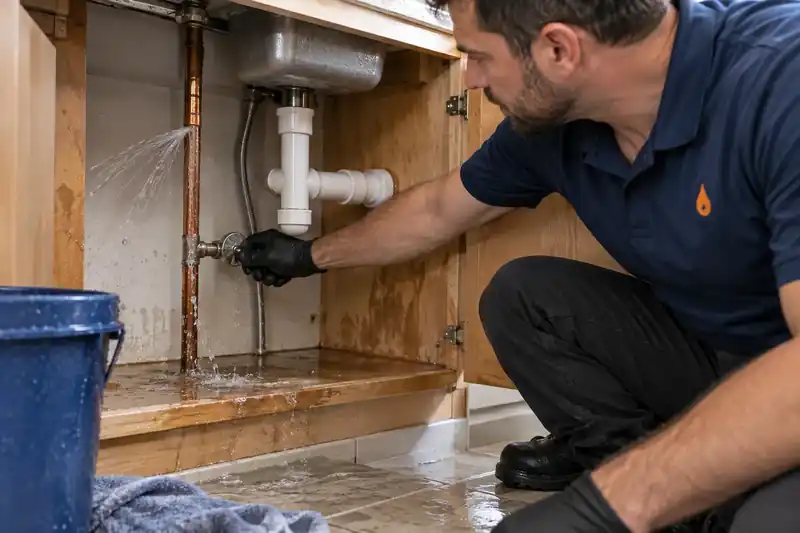
Burst Pipe Water Removal in DeSoto, TX
A burst pipe keeps pouring water until the main valve is closed, and on a slab floor that water spreads sideways under carpet, baseboards and cabinets. Shut off the main first, then call. Our crew can extract the standing water, find the moisture that soaked in, and set up drying before it spreads further.
226 Google, Yelp & Facebook reviews · Est. 2019
Request water extraction
Send your details and our team will contact you.
Water spreading now? Call (972) 961-2225
What is burst pipe water removal?
Burst pipe water removal is the emergency work of getting water out of a house after a supply line splits, a fitting blows off or a frozen pipe cracks. It covers three jobs: pumping or extracting the standing water, pulling water back out of the materials that absorbed it, and drying the structure until moisture readings prove it is dry.
A burst supply line is different from a slow drip. Supply lines are under constant city pressure, so a split pipe keeps releasing water until someone closes a valve. A few minutes can wet one room. A pipe that runs overnight or while the family is away can soak half a house.
Fixing the pipe itself is a plumber's job. The extraction and drying work is separate, and it can start as soon as the water is shut off, even before the repair is finished.
How does burst pipe water removal work?
Our crew works from the wettest point outward, because water from a burst pipe travels further than it looks. The tools change with the surface and the amount of water.
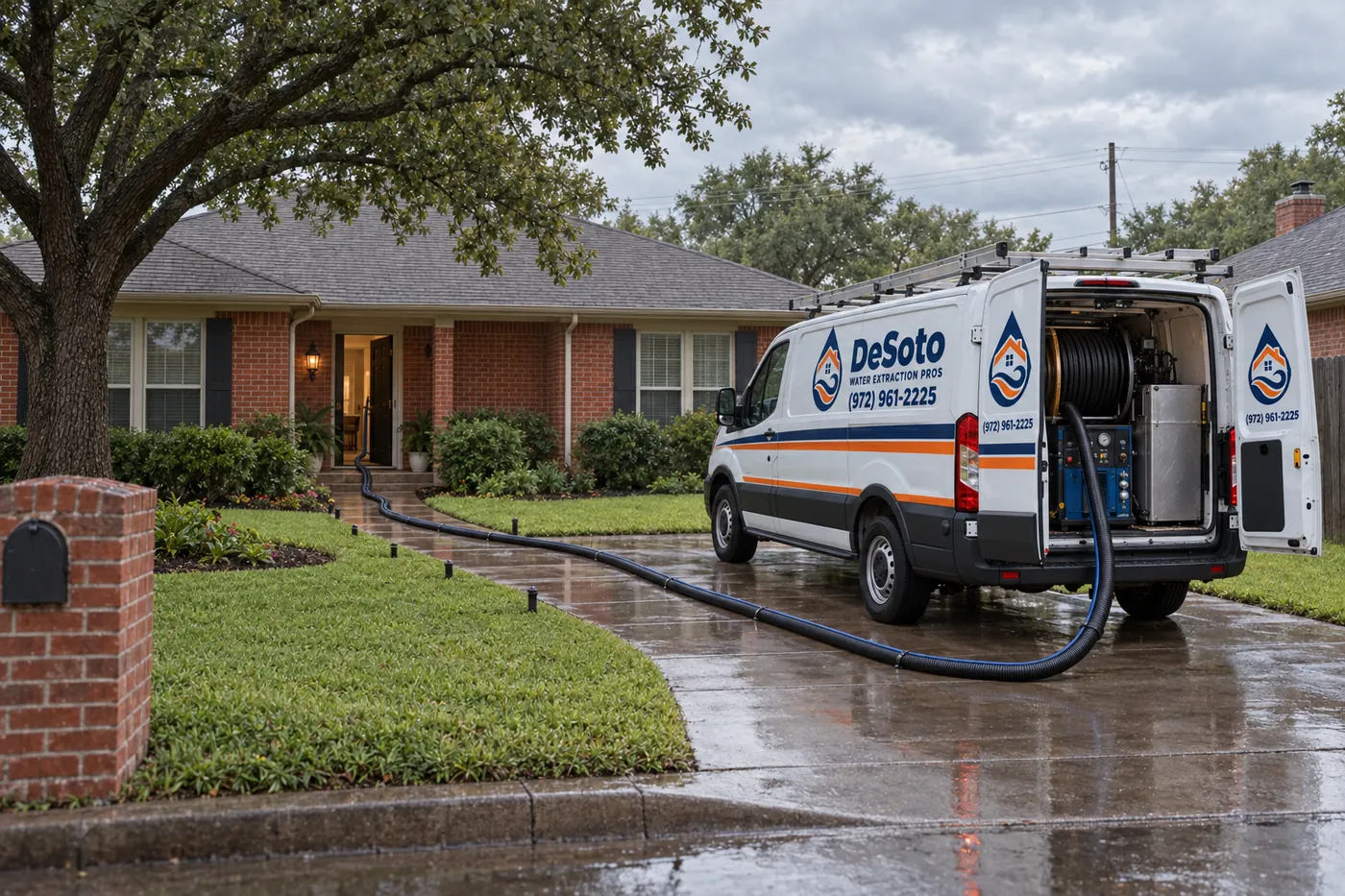
- Truck-mounted extraction. A powerful vacuum unit stays in the van, and a large hose runs through the front door to the wet rooms. It removes standing water and pulls water out of carpet much faster than a household wet vac.
- Portable extractors and pumps. These reach rooms the hose cannot, or handle deeper water in a garage or utility room.
- Weighted carpet tools. Our technician stands on a tool that presses the carpet and pad flat while the vacuum draws water up through both layers.
- Squeegee wands on hard floors. Tile, vinyl and laminate are cleared quickly, but water that slipped under laminate planks needs extra attention.
- Moisture meters and thermal cameras. These find where water has wicked up drywall, run behind cabinets or soaked into insulation in an exterior wall.
If a pipe burst in the attic, water may be sitting on top of the ceiling drywall and in the insulation above it. That changes the job, since the ceiling has to be checked for sagging before anyone works under it. Once the bulk water is out, air movers and dehumidifiers take over for structural drying of the walls, cabinets and slab.
What are the warning signs of a burst pipe?
A pipe that splits under a sink is obvious. A pipe that splits inside a wall or in the attic may not show itself for hours. Watch for these signs:
- Water spraying or running from a wall, a ceiling or the cabinet under a sink
- The sound of running water when every faucet, toilet and appliance is off
- The leak indicator on your water meter spinning while nothing in the house is using water
- Faucets that drop to a trickle or stop during a freeze, which points to a frozen line that may split
- Paint bubbling, or drywall darkening and softening near the floor, especially on exterior walls
- A brown stain, bulge or drip in a ceiling below attic plumbing
- Carpet that is wet along a wall or in a closet with no spill nearby
- A water bill that jumps with no change in how your household uses water
If you see any of these after a hard freeze, check the pipes in the attic, garage and exterior walls first. Those are the lines most exposed to cold air.
What causes burst pipes in DeSoto homes?
Most DeSoto houses are brick homes on concrete slab foundations, built from the 1970s through the 2000s. With no crawlspace, water supply lines often run through the attic or inside walls, and a slab gives spilled water nowhere to drain. It spreads across the concrete under carpet, laminate and tile until it is pulled out.
The biggest trigger is a hard freeze. North Texas homes are built for mild winters, so pipes in attics, garages and exterior walls have little protection when temperatures stay below freezing for days. The February 2021 winter storm, Winter Storm Uri, lasted nearly nine days and burst pipes across North Texas. Many homeowners found the damage only when the ice thawed and water pressure came back.
Age is the other factor. Fittings, shut-off valves and flexible supply connectors under sinks and toilets wear out over decades. Homes plumbed between the late 1970s and mid-1990s may have gray polybutylene supply pipe, a material known for failing at its fittings. North Texas clay soil also shrinks and swells between dry and wet seasons, which can stress lines that run under or into the slab.

What can you safely check first?
Work through these checks in order. Each one limits how far the water gets before our crew arrives.
- Close the main valve. Use the house-side valve if you have one, or the valve in the meter box near the street.
- Drain the pressure. Open the lowest faucet in the house, such as a tub, so water left in the lines runs out there instead of through the break.
- Protect the water heater. If the water will be off for a while, set a gas heater to its pilot or vacation setting, or switch off the breaker for an electric one.
- Trace the water. Feel the carpet along walls in the rooms next door, and open closets and lower cabinets.
- Photograph everything. Take wide shots and close-ups before you move furniture.
WarningNever thaw a frozen pipe with an open flame, a torch or a heat gun held on one spot. Stay out of any room where the ceiling is sagging, and do not step into water that is touching outlets or plugged-in cords.
What happens during our visit?
A burst pipe visit usually follows the same order, whether the leak hit a kitchen or three bedrooms.
- Safety and source check. Our crew confirms the main is off, asks whether a plumber has repaired the line, and checks for electrical hazards and sagging ceilings.
- Moisture mapping. Meters and a thermal camera trace the water through walls, under flooring and into the rooms next to the break.
- Documentation. Photos and readings are recorded for your insurer before anything is removed.
- Extraction. Standing water comes out first, then water held in carpet, pad and hard-floor seams.
- Controlled removal. We explain which materials cannot be dried, such as soaked pad, swollen cabinet toe-kicks or wet insulation, and remove them.
- Drying setup. Air movers and dehumidifiers are placed for the rooms and materials that are wet.
- Daily monitoring. Readings are taken each visit, and equipment comes out only when materials reach a dry standard.
What affects the cost of burst pipe water removal?
We price the job after inspecting it. These factors move the scope most on a burst pipe loss:
| Factor | Why it matters on a burst pipe |
|---|---|
| How long it ran | A line caught in minutes wets one room. One that ran overnight can reach several rooms and the ceiling below. |
| Where the pipe broke | An attic break wets insulation and ceilings. A wall break wets the cavity. An under-sink break mostly hits cabinets and floors. |
| Flooring type | Carpet can often be extracted. Water trapped under laminate or engineered wood usually means lifting boards. |
| Walls and cabinets | Opening drywall, pulling baseboards or removing toe-kicks adds labor but lets hidden moisture dry. |
| Drying days | The number of air movers and dehumidifiers, and how many days they run, depends on what got wet. |
When is a burst pipe an emergency?
A burst pipe is an emergency if the water is still running and you cannot close a valve, if water is near outlets or appliances, or if a ceiling is bulging. It is also urgent when more than one room is wet or water has run under cabinets or flooring. Even a leak that is now stopped keeps wicking into drywall and pad, so treat it as a same-day call.
Pro tipWhen a hard freeze is forecast, disconnect garden hoses, open the cabinet doors under sinks on exterior walls, and let a faucet on an exterior wall drip. Moving water and warm room air make a split line much less likely.
Frequently asked questions
Should I call a plumber or call you first?
Shut off the main valve first, then call both. The plumber repairs the pipe, and we remove the water and dry the house. Extraction does not have to wait for the repair, as long as the water stays off.
Why did my pipe start leaking when it thawed instead of when it froze?
Ice blocks the pipe and pressure builds between the ice and a closed faucet until the pipe splits. While the water is still frozen, the ice plugs the split. When it melts and pressure returns, water pours out, which is why so many leaks from the February 2021 freeze appeared during the thaw.
Is water from a burst pipe clean?
It starts as clean Category 1 water from the supply line. Once it runs across floors, soaks carpet pad and sits inside wall cavities, it picks up dirt and contaminants, and water left sitting can degrade into a higher category. Fast extraction keeps more of your materials salvageable.
Will my drywall need to be cut out?
Not always. Drywall wet with clean pipe water can often be dried in place if extraction and drying start quickly. It is usually cut out when it stays wet after drying, has soaked insulation behind it, has swollen or crumbled, or was touched by contaminated water.
Where is my main water shut-off valve?
Check two places. The city meter box near the street has a valve on the meter, which may need a meter key or a large wrench to turn. Many homes also have a house-side valve where the supply line enters the house. Find both before you ever need them.
Does homeowners insurance pay for burst pipe water removal?
Many standard policies cover sudden and accidental discharge from plumbing, which is what a burst pipe usually is. Repairing the pipe itself and damage from a slow leak that ran for weeks are often treated differently. Read your policy or call your insurer, and photograph the damage before anything is moved.
What Your Neighbors Are Saying About Us
Close the main, then get the water out
Every hour a burst pipe sits, more water wicks into drywall, pad and cabinets. Call us for burst pipe water removal in DeSoto and nearby cities.
DeSoto Water Extraction Pros · 1603 Osprey Dr #107, DeSoto, TX 75115