
Sewage Backup Cleanup in DeSoto, TX
Dirty water coming up through a toilet, tub or floor drain is a sewage backup, and it is a health hazard, not just a mess. Stop using water, keep everyone out of the area, and call us. Our crew is equipped to extract black water, remove contaminated materials and disinfect what stays.
226 Google, Yelp & Facebook reviews · Est. 2019
Request water extraction
Send your details and our team will contact you.
Water spreading now? Call (972) 961-2225
What is sewage backup cleanup?
Sewage backup cleanup is the removal of wastewater that has come back into a house through its drains, followed by disinfection and drying of everything it touched. It is different from a clean pipe leak because the water carries human waste.
The industry standard for water damage, IICRC S500, classes sewage as Category 3, or black water. That is the highest contamination level, the same class as outside flood water. It changes almost every part of the job: the protective gear, what can be kept, how waste is disposed of, and how the area is proven clean.
Cleanup is also separate from the plumbing repair. A plumber clears the blocked line so the backup stops. We deal with the sewage that already reached the floors, walls and contents.
How does sewage backup cleanup work?
The work follows a set order: protect people, remove the waste, remove what cannot be cleaned, disinfect what can, then dry. Skipping ahead, such as drying before contaminated materials are out, spreads the problem instead of fixing it.
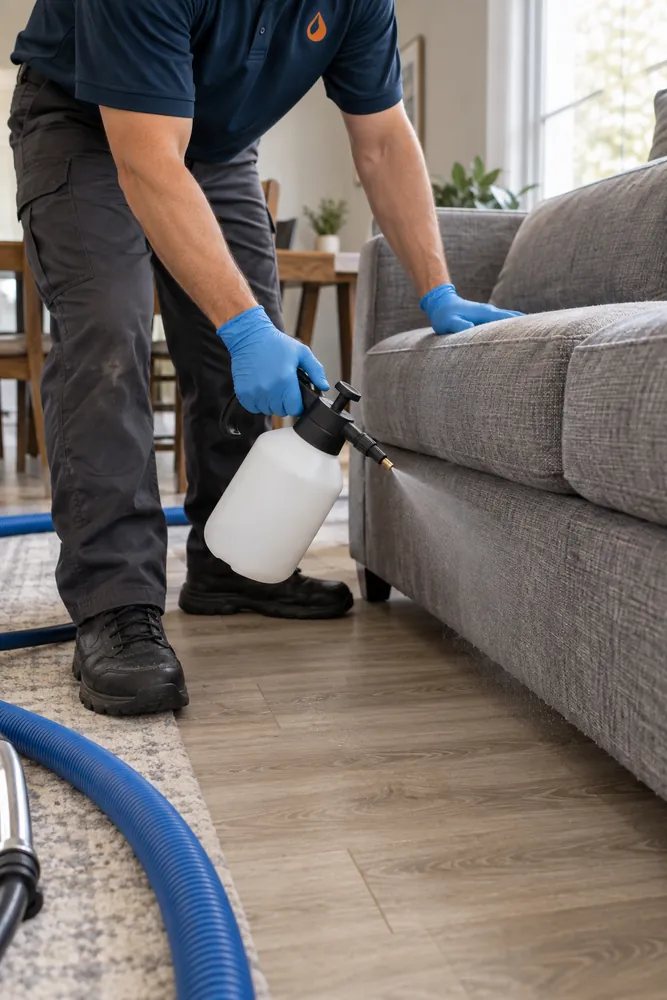
- Protective equipment. Our crew wears gloves, boots, eye protection, a respirator such as an N95 or half-face mask, and often disposable coveralls. Black water is treated as infectious.
- Containment. Plastic sheeting closes off the affected rooms, and a HEPA air scrubber filters the air so contaminated dust and mist do not travel through the house.
- Extraction. Pumps and extractors pull out standing sewage and the liquid soaked into flooring. Waste goes into sealed tanks, not down the same blocked drain.
- Removal of porous materials. Carpet, pad, lower drywall, insulation and upholstered items that absorbed sewage usually cannot be made safe, so they are cut out, bagged and hauled away.
- Cleaning and antimicrobial treatment. Hard surfaces, framing and the slab are scrubbed, then treated with an antimicrobial product to kill what remains.
- Drying. Air movers and dehumidifiers dry the framing and slab, with moisture readings taken until the materials are dry.
What are the warning signs of a sewage backup?
A backup rarely starts as a flood. It usually gives small warnings first, and the lowest drains in the house show them before anything else.
- Dirty or brown water rising in a tub, shower or floor drain
- Water coming up in the shower when a toilet is flushed
- Several drains running slowly at the same time
- Gurgling from toilets or drains when the washer empties
- A sewer smell inside the house that does not go away
- Toilets that will not flush fully, or refill oddly on their own
- Water or waste around the sewer cleanout pipe outside
- Soggy, unusually green or smelly patches in the yard above the sewer line
Two or more of these at once points to the main sewer line rather than one clogged fixture. Stop using water and have the line checked before it overflows.
What causes sewage backups in DeSoto homes?
Most DeSoto homes are slab-on-grade houses built from the 1970s through the 2000s. The main sewer line leaves the house under or beside the slab and runs to the city main at the street or alley. A backup happens when something blocks or breaks that path.
- Tree roots. Established streets have large trees, and roots seek out the moisture in sewer lines. They enter through small cracks and joints, then grow into a mass that catches everything else.
- Grease, wipes and paper. Cooking grease hardens in the pipe. Wipes, including ones sold as flushable, do not break down the way toilet paper does.
- Aging pipe. Older homes may still have cast iron or clay drain lines that corrode, crack or sag over time, creating low spots where waste settles.
- Shifting clay soil. North Texas clay swells when wet and shrinks in drought. That movement can crack or separate buried pipe.
- Heavy rain. Intense spring storms can overload municipal sewer systems. Water that has nowhere else to go can push back into the lowest drains in a house.
What can you safely check first?
Your job before we arrive is to stop more sewage coming in and to keep people away from it. Leave the cleaning to us, since our crew works in the right gear.
- Stop all water use. Do not flush, shower, run the dishwasher or start the washer. Every gallon you send down has to come back up somewhere.
- Keep kids and pets out. Close doors to the affected rooms and keep pets confined elsewhere.
- Check the scope. From a dry spot, note whether one fixture or several are affected. That tells the plumber where to start.
- Find the cleanout. Most homes have a capped sewer cleanout pipe near the foundation or in the yard. Do not open it yourself if the line is full, since it can release sewage under pressure. Just tell the plumber where it is.
- Photograph everything. Take photos and video before anything is moved, for your insurance claim.
WarningDo not use a household vacuum or shop vac on sewage, and never mix bleach with other cleaners, since some combinations release toxic gas. If sewage is near outlets or appliances, only switch off breakers while standing on a dry floor.
What happens during our visit?
A sewage job should feel methodical. You should know what is being removed and why before the demolition starts.
- Source check. We confirm the line has been cleared by a plumber, or tell you it needs to be, so the backup will not return during cleanup.
- Safety and inspection. We check for electrical hazards, then trace how far the sewage spread using moisture meters, including under flooring and into wall bottoms.
- Scope and documentation. We explain which materials must go, photograph the damage and give you the scope before work begins.
- Containment and extraction. Rooms are sealed off, air filtration starts, and the standing sewage is pumped out.
- Tear-out. Contaminated carpet, pad, baseboards and lower drywall are removed and bagged for disposal.
- Clean and treat. Remaining surfaces are cleaned and given antimicrobial treatment.
- Dry and verify. Drying equipment runs with daily readings until the structure is dry and ready for rebuild.
What affects the cost of sewage cleanup?
No two sewage losses are priced the same, and Category 3 jobs carry extra steps that a clean-water job does not. We inspect first and explain the scope before starting.
| Factor | Why it matters on a sewage job |
|---|---|
| How far it spread | One bathroom floor is a small job. Sewage that ran under walls into a bedroom or hallway multiplies the tear-out. |
| How long it sat | Sewage that sat for a day or more soaks deeper into drywall and framing and raises the chance of mold. |
| Materials affected | Tile and sealed concrete can be disinfected. Carpet, pad, drywall and upholstered furniture are usually removed. |
| Containment and protection | Plastic barriers, air scrubbers and protective gear are required on black water losses. |
| Disposal | Contaminated materials are bagged and hauled away, which adds labor. |
| Drying time | The number of days equipment runs after tear-out affects the final bill. |
When is a sewage backup an emergency?
Any sewage on the floor of a living space is urgent. It keeps spreading into porous materials, the smell gets worse, and every hour raises the exposure risk for the people in the house. It is an emergency right away if sewage is still rising, reaches carpeted rooms, or sits near outlets, the water heater or the HVAC system.
Pro tipCall your insurer the same day and ask whether your policy includes water backup coverage. Keep damaged items, or at least clear photos of them, until the adjuster tells you they can go.
Frequently asked questions
Is it dangerous to be around a sewage backup?
Yes. Sewage is Category 3 black water and can carry bacteria, viruses and parasites. Skin contact, splashes and the fine mist from pumping or vacuuming are all ways to get exposed. Keep children, pets and anyone with a weak immune system out of the area until it has been cleaned and treated.
Can I clean up a small sewage backup myself?
A small overflow on bare tile that is caught right away is sometimes handled by a homeowner wearing gloves, boots and eye protection. Once sewage reaches carpet, drywall, baseboards or anything porous, it needs professional extraction, material removal and antimicrobial treatment. A household vacuum or shop vac should never be used on sewage.
Do I need a plumber or a cleanup crew like ours?
Often both. A plumber clears the blockage in the drain or main sewer line so the backup stops. Our crew removes the sewage that already came into the house, takes out contaminated materials, disinfects and dries the area. The line should be cleared before cleanup starts, or it can back up again.
Can carpet be saved after a sewage backup?
Usually not. Carpet and pad that touched sewage are treated as contaminated under the industry standard and are normally removed and bagged. Hard surfaces such as tile, sealed concrete and many cabinets can often be cleaned, disinfected and kept.
Does homeowners insurance cover sewage backup?
Many standard policies exclude sewer and drain backup unless you added a water backup endorsement. Check your policy or call your insurer before work starts, take photos of everything, and keep damaged items until the adjuster says you can throw them out.
How do I know if the problem is my main sewer line?
If only one fixture is slow or overflowing, the clog is usually in that fixture's drain. If several drains back up at once, or water rises in the tub or shower when you flush a toilet or run the washer, the blockage is likely in the main sewer line and a plumber should clear it.
What Your Neighbors Are Saying About Us
Stop the water, keep everyone out, then call
Call us, and our crew can extract black water, remove contaminated materials and disinfect your DeSoto home.
DeSoto Water Extraction Pros · 1603 Osprey Dr #107, DeSoto, TX 75115