

Ceiling Leak Water Damage in DeSoto, TX
A brown ring, a bulge or water dripping from a light fixture means water is sitting on top of your ceiling drywall. Put a bucket under it, keep everyone out from under any sag, and call. Our crew can trace the wet area, remove what cannot be saved and dry the ceiling from both sides.
226 Google, Yelp & Facebook reviews · Est. 2019
Request water extraction
Send your details and our team will contact you.
Water spreading now? Call (972) 961-2225
What is ceiling leak water damage?
Ceiling leak water damage is water that reaches the ceiling from above and soaks the drywall, the insulation on top of it and sometimes the joists. The source might be the roof, a bathroom on the second floor, a pipe in the attic or the air conditioning equipment that sits up there in many North Texas homes.
Ceiling drywall hangs from screws driven into the joists. When the gypsum core gets wet it softens and loses strength, and water collects on top of the sheet instead of draining away. The stain you see from below is usually smaller than the wet area above it, because water spreads across the drywall and along the joists before it shows through the paint.
That is why a ceiling leak is two jobs: stopping the source, and drying or replacing everything the water touched on its way down, including the walls beneath it.
How is a ceiling leak found and dried?
Water rarely drips straight down from where it enters. It runs along roof decking, rafters, pipes and ductwork, then drops wherever it finds a low point. Finding the true entry point takes a few tools working together.
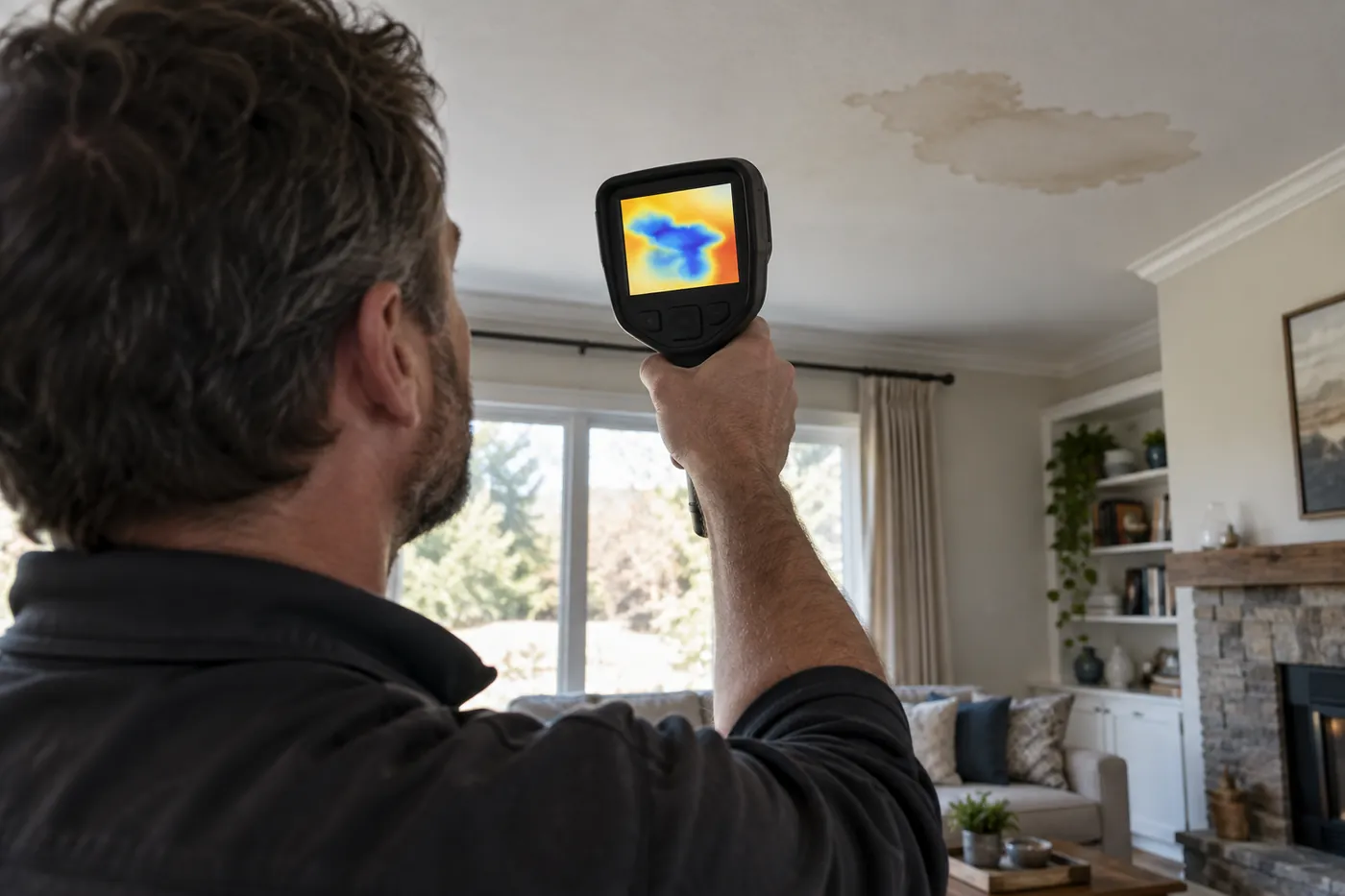
- Thermal imaging. A wet ceiling reads cooler than the dry drywall around it, so an infrared camera shows the real outline of the wet area, not just the visible stain.
- Moisture meters. Pin and pinless meters confirm which parts of the ceiling and upper walls are wet and how wet they are.
- Attic inspection. Our technician follows the water trail across insulation, decking and framing to the source, whether that is a roof penetration, a drain pan or a pipe fitting.
Once the wet area is mapped, the fix depends on what the readings show. A bulge holding water is drained in a controlled way. Drywall that sagged or crumbled is cut out, and soaked insulation above it is bagged and removed so the attic side can dry.
Drying a ceiling is harder than drying a floor because warm, moist air rises and collects there. Air movers are aimed up at the wet drywall, LGR dehumidifiers run in the room below, and the attic side gets airflow once the insulation is out of the way. Readings are taken every day until the ceiling and the walls below it match a dry reference. The roof, pipe or AC line itself is repaired by the right trade.
What are the warning signs?
Ceiling leaks often start small and hide for weeks, especially when the source only runs part of the time, like an AC unit in summer or a shower upstairs.
- A yellow or brown ring, often with a darker edge that grows over time
- Paint that bubbles, blisters or peels on the ceiling
- Drywall that sags, bulges or feels soft when pressed with a broom handle
- Drips from a light fixture, ceiling fan, smoke alarm or air vent
- Screw pops or hairline cracks along the drywall seams
- A musty smell near the attic hatch or in upstairs rooms
- Water dripping from a small pipe above a window outside the house
- A stain that grows after rain, after someone showers upstairs, or while the AC runs
The timing of the last sign is your best clue. Match when the stain grows to what was running at the time.
What causes it in DeSoto homes?
Many DeSoto homes sit on concrete slabs with no crawlspace, so the heating and cooling equipment, and sometimes the plumbing, runs through the attic instead. When something up there fails, the ceiling takes the hit. These are the usual sources.
- AC condensate. In many North Texas homes the furnace and evaporator coil sit in the attic. In summer the coil produces a steady flow of condensate that runs out through a drain line. When algae or sludge clogs that line, the drain pan fills, overflows or rusts through, and the water goes straight into the ceiling below. The secondary drain is often routed to drip above a window, so water there means the primary line is blocked.
- Roof damage. Hail season peaks in April and May, and Dallas County averages several significant hail events a year. Hail and wind loosen shingles and flashing around vents and chimneys, and the leak may not show until the next heavy rain.
- Bathrooms above. In two-story homes, a failed toilet wax ring, a cracked shower pan, worn grout or a loose tub overflow gasket leaks into the ceiling of the room below.
- Attic pipes and water heaters. Some homes run supply lines through the attic, and some have the water heater up there. The February 2021 freeze split attic pipes across North Texas and brought ceilings down with them.
What can you safely check first?
A few quick checks narrow down the source and limit the damage while you wait.
- Put a bucket and a tarp under the drip, and move furniture and electronics out of the way.
- Turn off the breaker for any light, fan or outlet in the wet ceiling.
- If a toilet or shower sits above the stain, close the toilet's supply valve and stop using that bathroom.
- From the attic hatch, shine a flashlight at the AC unit. Water in the pan under it means the condensate line is clogged. Turn the system off at the thermostat to stop more water forming.
- If you go into the attic, step only on joists or decking, never on the drywall between them.
WarningNever stand under a sagging ceiling, and do not touch a light fixture with water in it. In homes built before the 1980s, textured popcorn ceilings may contain asbestos, so do not scrape or break them until the material has been tested.
What happens during our visit?
The visit follows the water from the top down, then dries everything it touched.
- Safety first. Our crew checks for sagging drywall and live electrical fixtures, confirms power is off where needed, and protects the floor and contents below.
- Source tracing. A thermal camera, moisture meters and an attic inspection locate where the water got in and how far it traveled.
- Mapping the walls below. Water runs down inside wall cavities, so the walls under the stain are checked too.
- Controlled removal. Pooled water is drained, failed drywall is cut out, and wet insulation is bagged and removed. Plastic sheeting may contain dust and debris.
- Drying setup. Air movers and dehumidifiers go in below, with airflow directed to the attic side where possible.
- Daily readings. Ceiling and wall readings are logged every day until they reach the drying goal.
- Handoff. Photos and moisture logs go to you for insurance, and the source repair goes to a roofer, plumber or HVAC technician before the ceiling is closed up.
What affects the cost?
Ceiling jobs vary more than most, because the source and access change the work. We inspect first and explain the scope before starting.
| Factor | Why it matters |
|---|---|
| Size of the wet area | More ceiling and more affected walls mean more removal, equipment and readings. |
| Attic access | Low roof pitch, tight spaces and equipment in the way slow the work above the ceiling. |
| Insulation removal | Soaked blown-in insulation has to be removed and bagged before the attic side can dry. |
| Ceiling texture | Older textured ceilings may need asbestos testing before any drywall is cut. |
| Type of water | Water that passed through attic insulation and debris may be handled as dirtier than clean supply water. |
| Days of drying | Ceilings and upper walls may take longer to dry than floors. |
When is it an emergency?
Call right away if the ceiling is sagging or cracking, if water is dripping from a light fixture or near wiring, or if water is still actively running. A pressurized supply line in the attic keeps flowing until the main valve is closed, so shut it off first. A small stain that is not growing is less urgent, but it still means water is sitting above the drywall and should be checked within a day or two.
Pro tipPhotograph the ceiling, the attic and the AC drain pan before anything is cleaned up. Insurers usually ask what caused the leak, and a photo of the source is the evidence they want.
Frequently asked questions
Is a sagging ceiling dangerous?
Yes. Wet drywall loses strength while the water pooled on top adds weight, so a sagging section can come down without warning. Keep people and pets out from under it, move valuables out of the room, and turn off power to any light or fan in that ceiling.
Should I poke a hole in a bulging ceiling?
For a small, shallow bulge, a hole at the lowest point with a bucket underneath lets the water drain where you choose. Stand to the side and wear eye protection. Skip it if the ceiling is cracking, sagging heavily or has a textured finish that has not been tested for asbestos.
Why is my ceiling leaking when it has not rained?
Look at the air conditioning and the plumbing. A clogged AC condensate line or overflowing drain pan in the attic, a leaking toilet or shower upstairs, or a pipe running through the attic can all leak on dry days. A stain that grows while the AC is running points to the condensate system.
Can a water-stained ceiling be saved?
Sometimes. Drywall that got wet briefly and never sagged can often be dried in place, then sealed with a stain-blocking primer before painting. Drywall that sagged, crumbled or stayed wet for days usually has to be cut out and replaced.
Does wet attic insulation need to be replaced?
Usually. Wet insulation holds water against the drywall, adds weight and stops insulating properly. Soaked blown-in or batt insulation is typically removed so the attic side of the ceiling can dry, then replaced once the area reads dry.
Who fixes the roof, the pipe or the AC line?
We handle the wet materials: removal, drying and moisture readings. The source is repaired by the matching trade, such as a roofer, plumber or HVAC technician. Book that repair right away so the ceiling is not patched before the leak is fixed.

What Your Neighbors Are Saying About Us
Find the water before the ceiling falls
Put a bucket under the drip, keep people out from under any sag, then call us. Our crew can trace the leak and dry the ceiling.
DeSoto Water Extraction Pros · 1603 Osprey Dr #107, DeSoto, TX 75115