
Structural Drying in DeSoto, TX
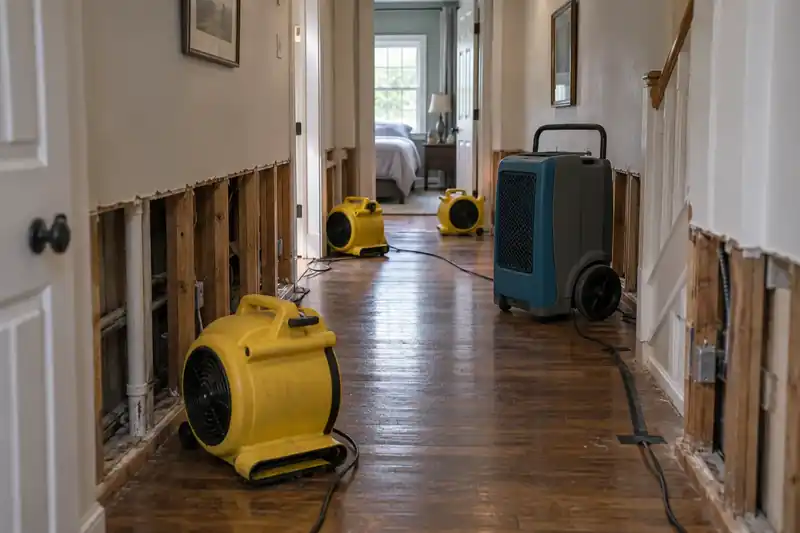
Structural drying removes the water that soaked into drywall, framing, cabinets and the slab after the standing water is gone. Our crew sets up LGR dehumidifiers and air movers, then takes moisture readings every day until each material reaches a measured dry goal.
226 Google, Yelp & Facebook reviews · Est. 2019
Request water extraction
Send your details and our team will contact you.
Water spreading now? Call (972) 961-2225
What is structural drying?
Structural drying is the controlled drying of the building itself: drywall, studs, bottom plates, baseboards, cabinets, subfloor and the concrete slab. Extraction removes the liquid water you can see. Drying removes the water those materials absorbed, which is usually far more than the surface suggests.
The work follows the IICRC S500, the industry standard for water damage restoration. It treats drying as something you measure. We take a reading from the same material in an unaffected room, use it as the drying goal, and keep adjusting equipment until every wet reading matches it.
A room is dry when the numbers say so, not when the carpet feels dry to the touch. That difference is why a wall can look fine for a week and then grow mold behind the baseboard. Structural drying normally starts right after extraction, but it is also the fix for moisture left behind by an older leak that was never dried properly.
How does structural drying work?
Drying speeds up evaporation from wet materials, then pulls that evaporated water out of the air before it can soak back in. Four tools do most of the work, and two of them exist only to prove the other two are working.
- LGR dehumidifiers. Low grain refrigerant units chill air below its dew point so the moisture condenses and drains away. Unlike a household dehumidifier, they keep pulling water out when the air is already fairly dry, which is exactly what the last days of a drying job need.
- Air movers. These high-velocity fans push a sheet of air across wet walls and floors. They sit at angles along the baseboards so the damp layer of air on each surface is constantly replaced with drier air.
- Moisture meters. Pin meters read moisture inside drywall and wood. Pinless meters scan a surface without leaving holes. A thermo-hygrometer measures temperature and relative humidity, which gives grains per pound: the actual amount of water in the air.
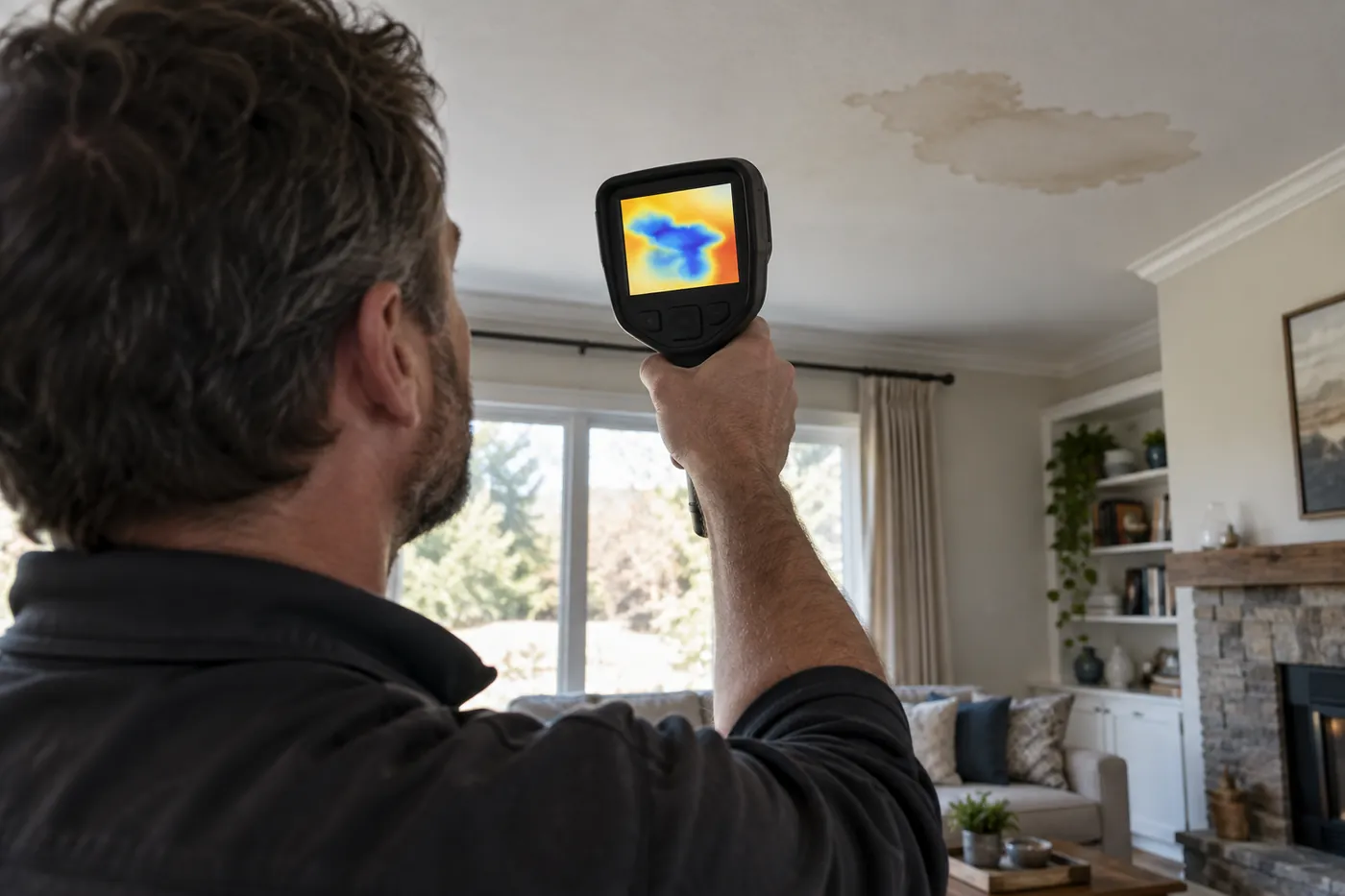
- Thermal imaging. Evaporating water cools the surface it sits on, so wet areas show up as cooler patches on an infrared camera. The camera shows where to test. The meter confirms it.
Some materials need more than air blowing across them. Wall cavities can be dried by drilling small holes behind the baseboard and forcing air inside. Hardwood floors may get drying mats that draw moisture up through the boards. Cabinet toe-kicks are often removed so air reaches the void underneath. Desiccant dehumidifiers come in for dense materials or cool conditions where refrigerant units lose efficiency.
When a material cannot dry in place, it comes out. A flood cut removes a strip of drywall above the highest wet reading so wet insulation can be pulled and the framing can breathe. Saturated carpet pad is usually removed for the same reason.
What are the warning signs?
Trapped moisture rarely announces itself with a puddle. It shows up as small changes in the materials that absorbed it, often days after the leak looked finished.
- A musty or earthy smell that comes back after you air the room out
- Baseboards that are swollen, split at the joints or pulling away from the wall
- Laminate or hardwood planks that cup, crown or feel soft at the seams
- Paint that bubbles or peels, or a faint tide line along the bottom of the wall
- Drywall that feels soft or crumbles when you press it near the floor
- Carpet that stays cool and damp, or a tack strip that has darkened or rusted
- Cabinet bases or toe-kicks that are swollen, stained or delaminating
- Condensation on windows or a clammy feel in rooms near the leak
Any one of these in a room that had water in it means the drying was not finished. Two or more together usually means moisture has spread into the wall cavity or under the flooring.
What causes it in DeSoto homes?
Most DeSoto houses are brick homes built on concrete slabs between the 1970s and the 2000s. A slab has no crawlspace for water to drain into, so a leak spreads sideways under carpet, laminate and tile and wicks into the bottom plate of every wall it reaches. The concrete itself absorbs water and gives it back slowly.
The water that needs drying usually comes from one of a few places:
- Supply lines that split during a hard freeze, as happened across North Texas in the February 2021 storm
- Failed water heaters, washing machine hoses, dishwashers and ice-maker lines
- AC condensate that overflows from an attic drain pan into the ceiling and walls below
- Rain driven under doors or through roofs during spring storms
A common pattern is the half-dried loss. Box fans run for a day or two, the surface feels dry, the baseboards go back on, and the bottom plate and slab stay wet underneath. Weather matters too: on humid days, opening windows to air a house out can bring in more moisture than it removes.
What can you safely check first?
You can learn a lot about how far the water went before anyone arrives. Stick to looking, touching and photographing.
- Confirm the source is off. If it is a supply line, the main valve should stay closed.
- Press on baseboards and the lower drywall in every room that shares a wall with the wet area.
- Check closets, under sinks and behind furniture for smell, stains or swelling.
- Move furniture off wet carpet, or set the legs on foil or plastic blocks to stop staining.
- If the water was clean and the air handler and ducts stayed dry, keep the air conditioning running to help lower humidity.
WarningDo not run fans on sewage or outside flood water, because blowing air across contaminated materials spreads them. Do not paint over stains or reinstall baseboards until readings confirm the wall is dry.
What happens during our visit?
A drying job is a process that runs over several days, not a single visit. Expect our crew to work through these steps.
- Source and safety check. Our crew confirms the leak is stopped, checks for electrical hazards and identifies the water category.
- Moisture mapping. Meters and a thermal camera trace the wet boundary in walls, floors and cabinets, and dry reference readings are taken in an unaffected room.
- Drying goals. Each material gets a target reading based on that dry reference.
- Removal. Pad, flood cuts, wet insulation and swollen toe-kicks come out where they cannot dry in place.
- Equipment setup. Dehumidifiers and air movers are placed for the size of the area. Plastic sheeting may close off wet rooms so the equipment works on a smaller space.
- Daily monitoring. Readings are logged every day, and equipment is moved, added or removed as areas dry.
- Final readings. Equipment comes out only when every reading meets its goal, and the moisture log is handed over for your insurer and repair contractor.
What affects the cost?
Drying is priced on scope and time. We inspect first and explain the plan before equipment goes in. These are the factors that change the job.
| Factor | Why it matters |
|---|---|
| Wet area | More rooms and square footage mean more dehumidifiers, more air movers and more readings. |
| Materials | Hardwood, cabinets and concrete hold water longer than drywall and need specialty setups. |
| Water category | Contaminated water means more removal, protective gear and antimicrobial treatment. |
| Days of drying | Equipment is usually charged per unit per day, so slow-drying materials add cost. |
| Removal needed | Flood cuts, pad removal and toe-kick removal add labor and disposal. |
| Delay before drying | Water that sat for days has spread further and may need mold work. |
When is it an emergency?
Drying is urgent any time water has soaked into walls or flooring in the last day or two, because the EPA notes mold can begin to grow on damp materials within 24 to 48 hours. It is also urgent when wet drywall is near outlets or wiring, when the water was contaminated, or when a ceiling above the wet area is stained or sagging. A slow leak discovered late still needs drying now. The clock simply started earlier.
Pro tipAsk our crew for a copy of the daily moisture log and photos of the equipment setup. It shows your insurer and your drywall contractor that the walls were dry before anything was closed up.
Frequently asked questions
How long does structural drying take?
Many jobs finish in three to five days, but the readings decide it, not the calendar. Dense materials such as hardwood, cabinet bases and the concrete slab take longer, and water that sat for days before drying started adds time.
Can I dry my house with box fans and a household dehumidifier?
They help with a small clean-water spill caught early. They do not move enough air or pull enough water out of the air to dry a wall cavity, subfloor or slab, and without a moisture meter there is no way to know when the job is actually done.
Why do you keep the windows closed?
Dehumidifiers work best in a closed space where they can keep lowering the humidity. On humid days, open windows let damp outdoor air in and slow the drying. We compare indoor and outdoor readings before deciding whether any outside air helps.
Do my walls have to be cut open?
Not always. Clean water caught early can often be dried in place by drilling small holes behind the baseboard and forcing air into the cavity. A flood cut is usually needed when the water was contaminated, when the insulation inside the wall is soaked, or when readings will not come down.
What is an LGR dehumidifier?
LGR stands for low grain refrigerant. It is a commercial dehumidifier built to keep removing moisture even when the air is already fairly dry, which a household unit struggles to do. That makes it a common choice for the final days of a residential drying job.
Can I turn the drying equipment off at night?
Ask us first. The equipment is loud and draws noticeable power, but drying depends on steady airflow and low humidity, so switching it off or moving it usually slows the job. We can place units on suitable circuits and away from bedrooms where possible.
What Your Neighbors Are Saying About Us
Get the drying measured, not guessed
Call us and describe which rooms got wet and when. Our crew can map the moisture and set up drying equipment.
DeSoto Water Extraction Pros · 1603 Osprey Dr #107, DeSoto, TX 75115